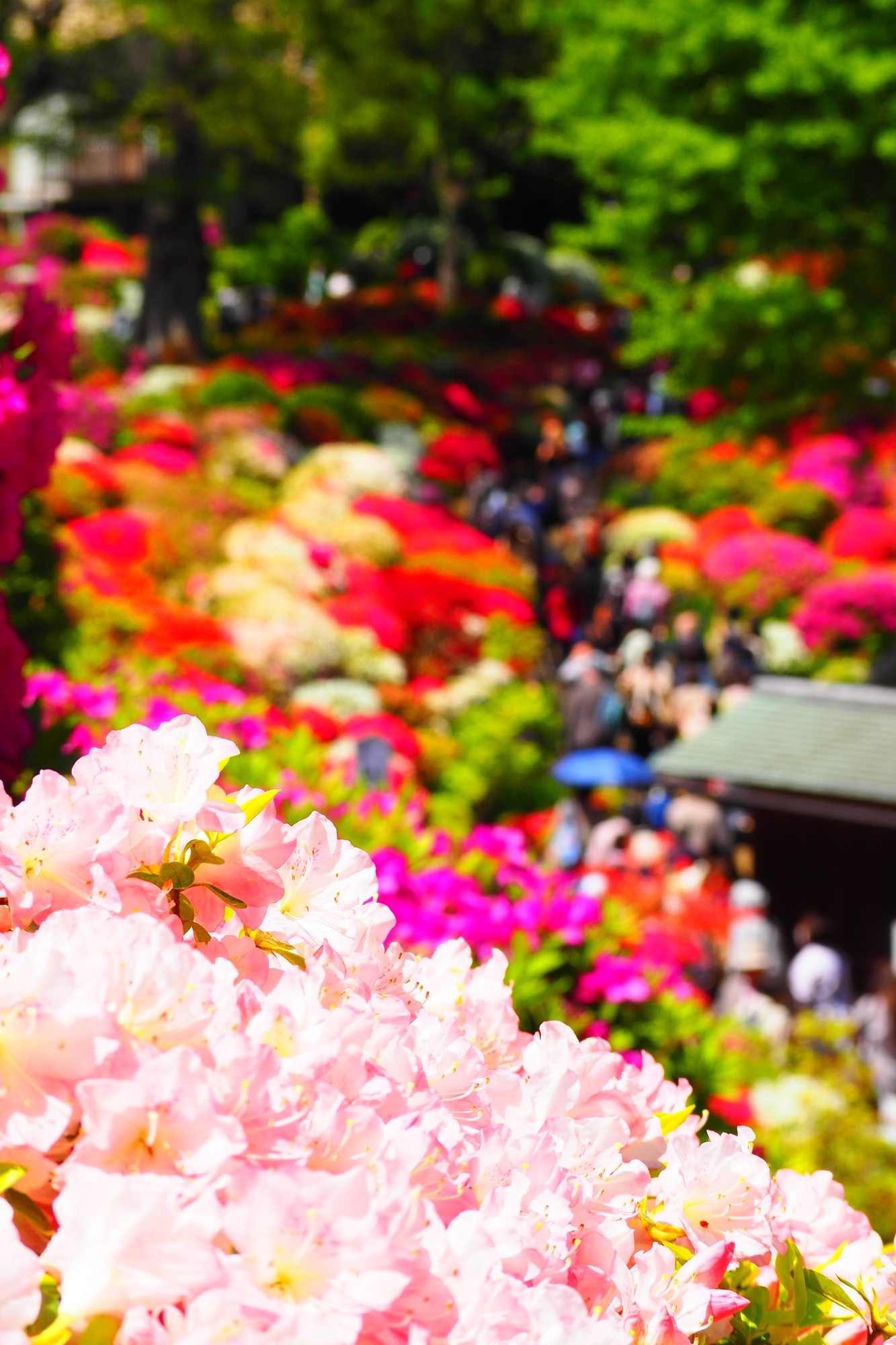

The Azalea Festival at Nezu Shrine is a beloved spring tradition in Tokyo, held annually around April. During this season, the shrine’s Azalea Garden becomes a breathtaking display of about 3,000 azalea bushes spanning around 100 varieties. It is also recognized as one of Bunkyo Ward’s “Five Great Flower Festivals.”
The colorful azaleas that fill the shrine grounds have been lovingly cultivated since the Edo period. With a stunning range of colors including white, crimson, and purple, visitors are especially captivated by the lush, multi-petaled varieties.
During the festival, the shrine bustles with people enjoying flower viewing. On weekends, plant markets, antique fairs, and food stalls are set up, adding to the festive atmosphere. The limited-edition festival goshuin (shrine seal stamp) is also a popular draw. This is a wonderful event where you can fully experience the beauty of Japanese spring at a historic shrine.
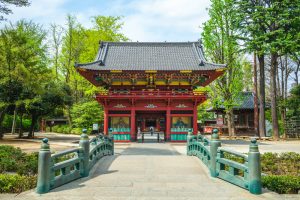
Nezu Shrine boasts a long history, said to have been founded around 1,900 years ago by the legendary hero Yamato Takeru. The buildings constructed during the large-scale renovation by the 5th shogun, Tokugawa Tsunayoshi, in the Edo period have been designated Important Cultural Properties of Japan. Having survived the Great Kanto Earthquake and the Tokyo air raids, the shrine is also known as a spiritual power spot.
While the Azalea Festival began in 1970 (Showa 45), the history of azaleas at Nezu Shrine dates back approximately 350 years to the Edo period. It is believed that the first azaleas were transplanted from Tatebayashi in Gunma to the hilltop residence of Tsunashige, Tsunayoshi’s elder brother. Today, the sight of 3,000 azalea bushes in full bloom has become a symbol of Tokyo’s spring. The festival attracts many visitors each year.
During the festival, daily events include plant markets, antique fairs, and food stalls, with additional special events on weekends. Visitors can also enjoy special exhibitions such as the “Thirty-Six Immortal Poets” paintings by master Yamato-e artist Morimura Yoshinaga, and the rare metal statues of Zuishin (guardian deities).
The festival-exclusive goshuin is also in high demand, but supplies are limited, so early visits are recommended.

The wide variety of azaleas, which bloom in staggered phases, is one of the festival’s main charms. Early in the season, the contrast between the fresh green leaves and the first blossoms is stunning. By mid-April, the garden is in full bloom. It’s a great idea to visit multiple times during the festival to catch the different blooming stages.
Around 3,000 azalea bushes of about 100 varieties are planted at Nezu Shrine. Each type blooms at a different time, offering visitors a unique and ever-changing landscape depending on when they visit. Thanks to the early-, mid-, and late-blooming varieties, the beauty of the azaleas can be enjoyed over a long period.

All photos by PIXTA